ServicesTile Roofing
Tile Roofing in Paradise Valley
Most tile roofs don't fail at the tile. They fail underneath, where the underlayment bakes in the sun until it cracks. We replace that layer, re-lay your existing clay or concrete tile, swap broken pieces for matched ones and rebuild the flashing so water has nowhere to go.
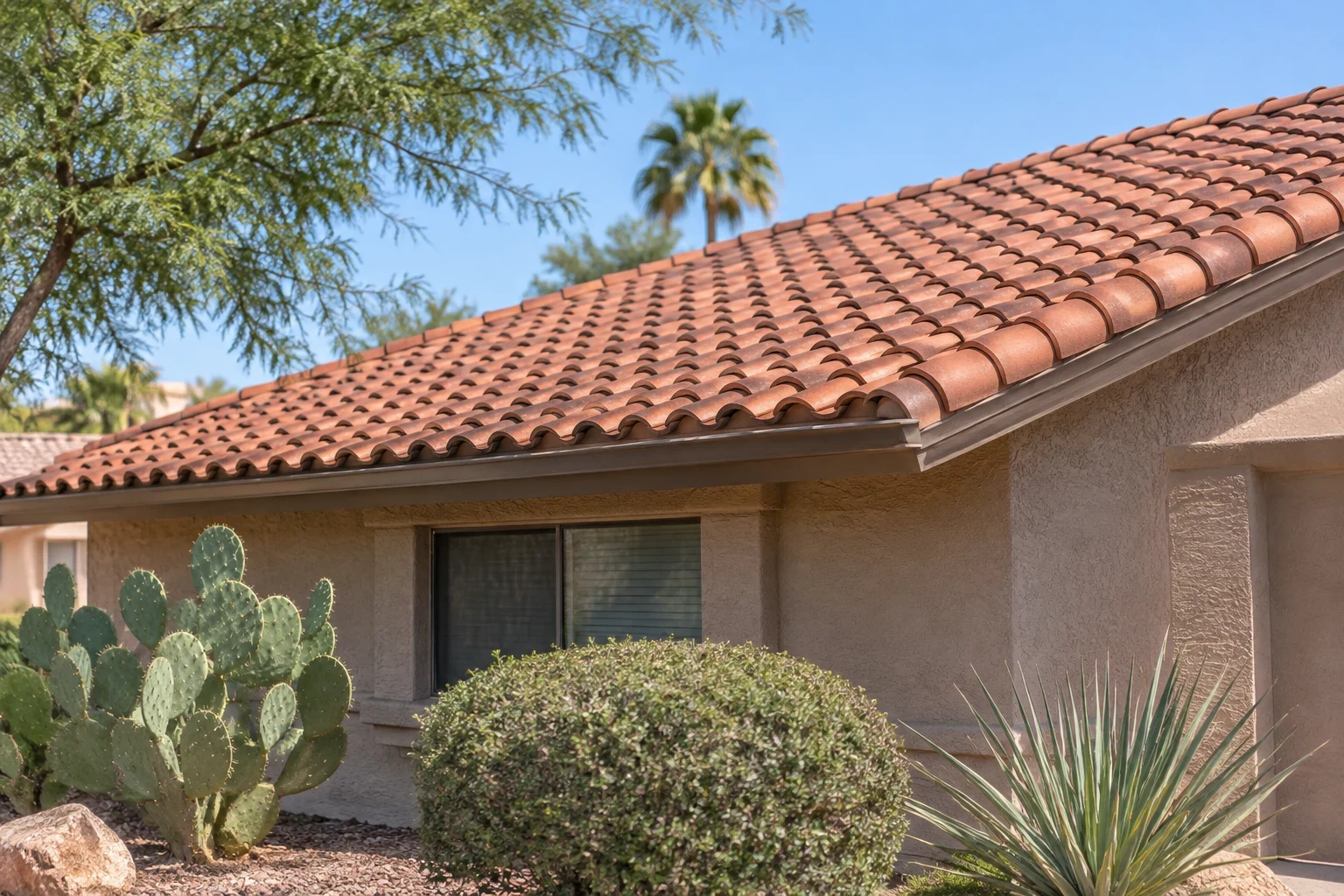
The tile is the shield, the underlayment is the roof
A clay or concrete tile can last for many decades. The membrane under it usually can't. Tile sheds most of the water and blocks the sun, but the felt or synthetic underlayment beneath it does the actual waterproofing. Years of desert heat dry that felt out until it splits along the battens and crumbles at the eaves, and then the next hard rain finds the deck.
That's why most tile roofing work is a re-lay rather than new tile. Your tile comes off and waits in neat stacks up on the roof while we put down fresh underlayment and new flashings, then the same pieces go back into place. Your home keeps its look, and you pay for new material only where it's needed. If the tile itself is failing or you want a different profile, we price new tile too, and our Roof Replacement page covers full tear-offs.
We work on your roof the way we'd want a neighbor working on ours: tile handled one piece at a time, walkways kept clear, and a plain explanation of what we found before anything changes.
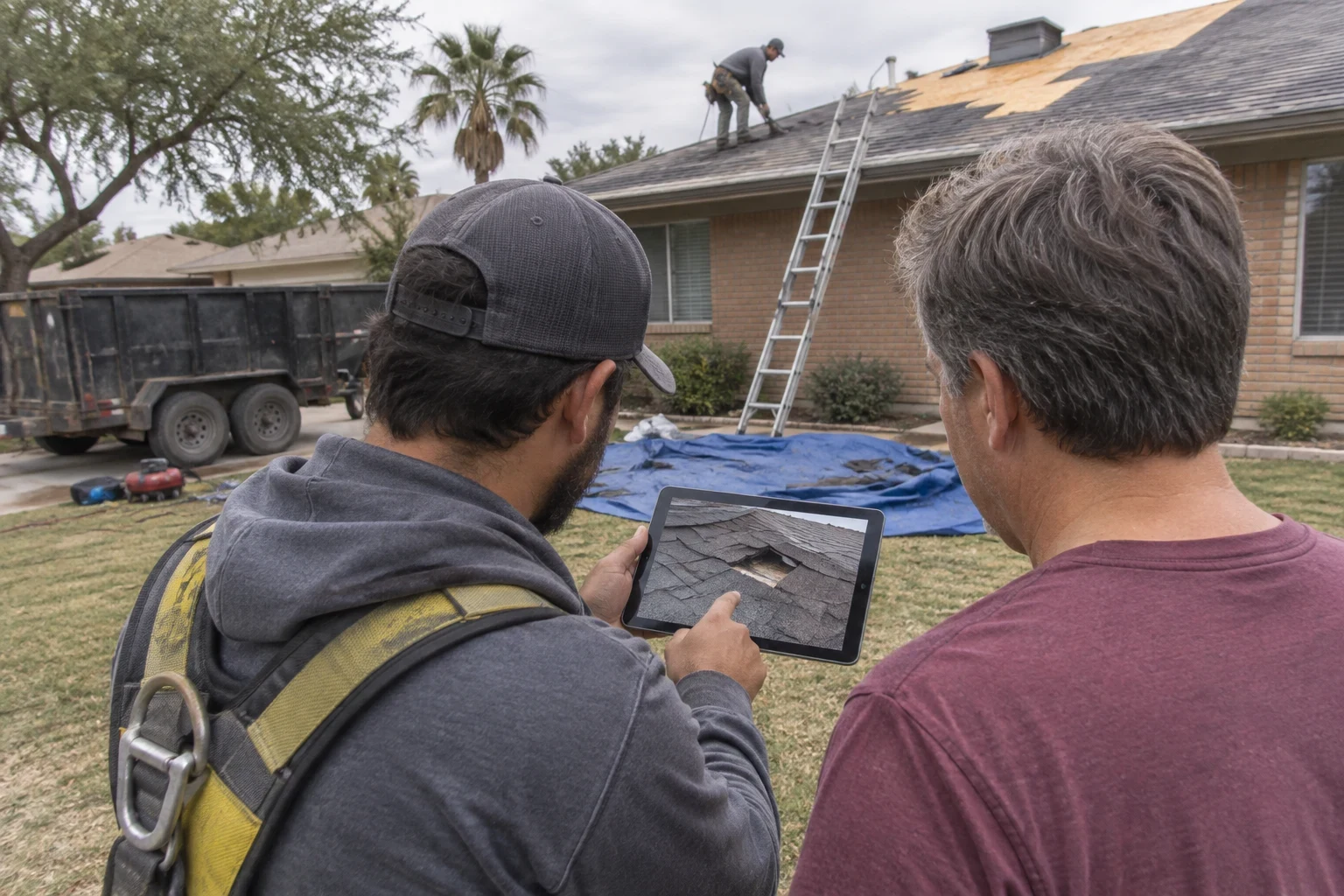
What a tile roof job includes
- 01
New underlayment
We strip the old felt down to the deck and install underlayment rated for tile, usually a two-ply system or a high-temperature synthetic. Laps run downhill so water drains toward the eave instead of back under a seam.
- 02
Tile lift and re-lay
Existing tile comes off by hand, gets sorted, and is stacked evenly across the roof so no single spot carries too much weight. Sound tile goes back on new battens with fresh fasteners.
- 03
Matched replacement tile
Cracked and chipped pieces are replaced with the closest profile and color we can source. Some older concrete tile lines are discontinued, so we may move sound tile from a back slope to the front and place new pieces where they won't stand out.
- 04
Valleys and flashing
We replace valley metal, pan flashing along walls and chimneys, and the lead or rubber pipe jacks. These metal parts carry the most water on a tile roof, and they are where most leaks begin.
- 05
Ridge, hip and eave details
Hip and ridge tiles are reset with mortar or foam adhesive according to the tile maker's instructions. At the eaves we install bird stop to keep pigeons, nests and debris out of the open tile ends.
- 06
Cleanup
We haul off the torn-out felt, broken tile and loose nails ourselves. Before the crew leaves, a rolling magnet goes over the yard, beds and driveway to catch any stray fasteners.
Questions about Tile Roofing?
Call(480) 470-6535Signs your tile roof needs work
Ceiling stains after rain
A brown ring on a ceiling or a damp spot in the attic means water got past both the tile and the underlayment. The stain often sits a few feet downslope from the real entry point.
Slipped or cracked tiles
A tile that has slid out of line exposes the underlayment to direct sun, which speeds its breakdown. Slipping usually points to a rusted nail or a rotted batten underneath.
Crumbling felt at the eaves
Look at the bottom edge where tile meets fascia. If the black felt there flakes apart or is missing, the rest of the field is usually in similar shape.
Broken tile after other trades
Solar installers, HVAC techs and satellite crews often crack tile walking to their equipment. One cracked tile can let water reach the felt for years before a stain shows inside.
Original underlayment on an older roof
Many older tile roofs were built over a single layer of felt that wears out long before the tile does. If yours has never been re-laid, the membrane is likely near the end of its life.
How a tile roof job runs
- 1
A phone conversation
Tell us the age of the roof, the tile type if you know it, and where any water shows inside. That tells us what to look at first.
- 2
On the roof and a written estimate
We walk the roof, stepping only on the lower third of each tile where it's supported, and lift a few pieces to see the felt and battens. You get photos and a written estimate with underlayment, flashing and replacement tile listed as separate lines.
- 3
Permit and materials
We pull the permit where the town requires one and order matched tile ahead of time. If your HOA has to sign off on a color, we write down the tile maker, profile and color so you have what the board asks for.
- 4
One slope at a time
We open, dry-in and re-tile one section before starting the next, so your home is never fully exposed. Crews start early, since underlayment softens and scuffs in afternoon heat.
- 5
Final walk-through
We walk the finished roof and the ground around your home with you, show you the new flashing and any rotted decking we replaced, and answer questions.
What moves the price of tile roofing
Tile work is priced mostly by labor and underlayment, because the tile is often reused. The figures that change a quote are visible once we're on the roof, which is why we price after looking rather than over the phone alone.
- Roof size and pitch
- More squares mean more tile to lift and re-set. Steeper slopes need roof jacks and slow the crew down.
- Reused versus new tile
- A re-lay with a handful of replacements costs less than new tile across the roof. Breakage rates rise on older, brittle clay.
- Underlayment system
- A two-ply or high-temperature synthetic system costs more than single-layer felt and holds up longer under tile in this heat.
- Penetrations and details
- Chimneys, skylights, valleys and walls each need flashing built by hand. A cut-up roof takes more time than a simple gable.
- Deck condition
- Rotted sheathing only shows once the felt is off. We photograph it and tell you before replacing any boards.
Tile roofing questions
Will my old tile go back on the roof?
In most cases it will. Clay and concrete tile seldom wear out from sun exposure alone, so the pieces are usually sound even when the felt beneath them has failed. Older roofs do lose some tile to breakage during removal, so we line up matched replacements for those pieces before work begins.
Is clay or concrete tile better?
Clay holds its color longer and weighs a bit less per piece, but it is more brittle underfoot. Concrete is tougher to walk on and costs less, though its surface color can fade over time. Both perform well if the underlayment and flashing beneath them are done right.
Will my home be open to the weather during the work?
Only one section at a time. Each slope is dried-in with new underlayment the same day it's opened, and we watch the forecast closely during monsoon season.
Do I need a full re-lay for one leak?
Not always. If the felt is still flexible and the leak traces to a single cracked tile or a failed pipe jack, a targeted fix makes sense, and our Roof Repair page explains that work. If the felt crumbles everywhere we lift, patching one spot just moves the leak.
Can you match tile on an older roof?
Often we can find the same profile or a close match. When a line is discontinued, we borrow sound tile from a less visible slope for the front and use new pieces in the back.
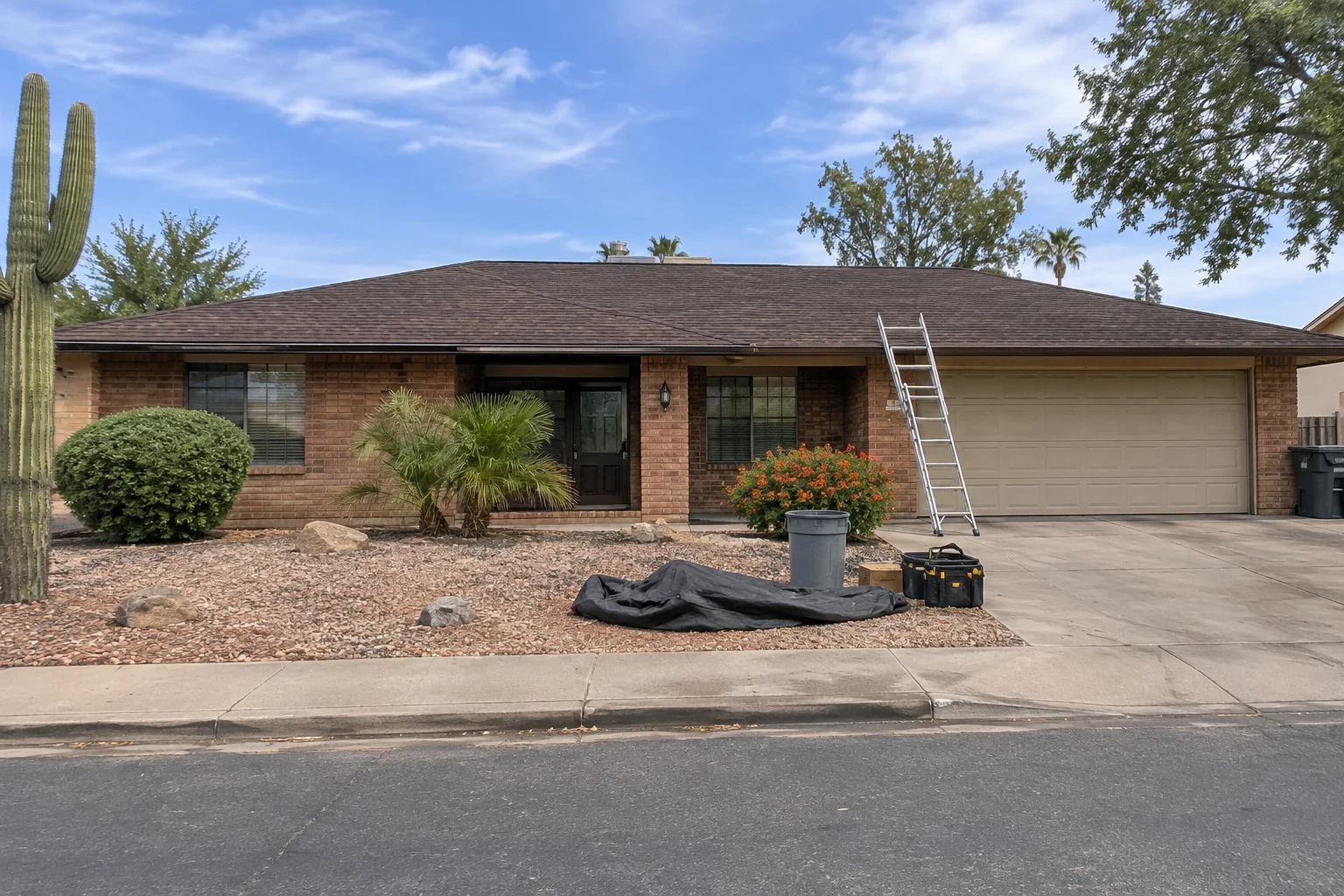
Talk through your tile roof with us
Tell us what you're seeing and how old the roof is. We'll explain whether a re-lay, new tile or a smaller fix fits, and what comes next.