ServicesFlat Roofing
Flat Roofing in Paradise Valley
We install and rework low-slope roofs on homes with parapet walls, using modified bitumen, TPO and elastomeric coatings. The goal is simple: water leaves the roof fast, seams stay sealed through summer heat, and you know what we plan to do before we start.
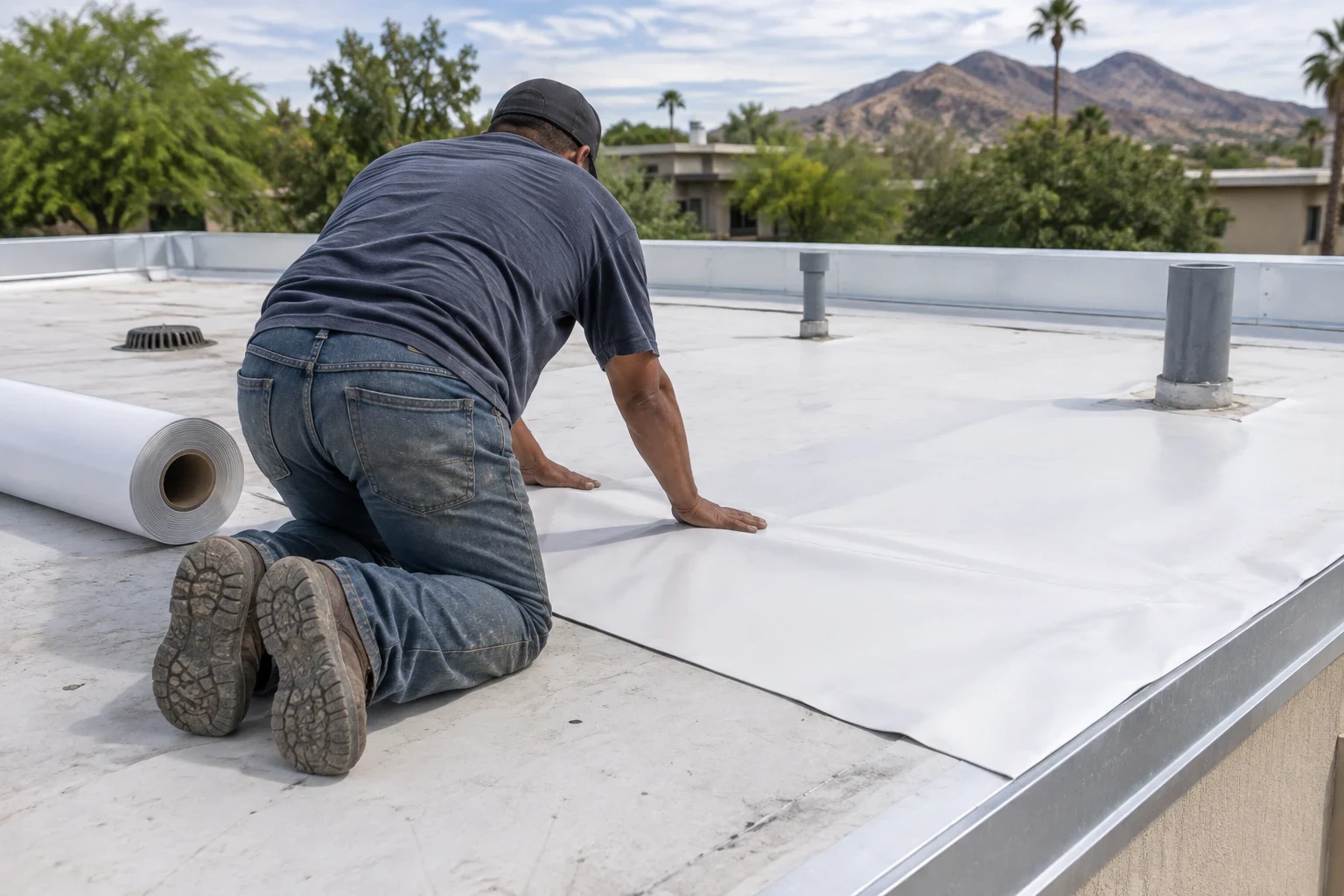
What flat roofing work covers
A flat roof is never truly flat. A good one has about a quarter inch of fall per foot, steered toward scuppers, canales or roof drains. When that slope is missing or the membrane has worn through, water sits in low spots, UV and heat break down the surface, and leaks show up at the walls and penetrations first.
Many homes here pair a flat roof with stucco parapets, so most of our attention goes to the edges: where the membrane turns up the parapet, where the coping caps it, and where water exits. Those joints move every day as the roof heats and cools, and that movement is what opens them up.
If your roof is sprayed polyurethane, our Foam Roofing page covers that system. For pitched sections with tile or shingles, see Tile Roofing or Shingle Roofing.
What the work includes
Tear-off to the deck
We remove failed layers down to the sheathing so we can see rot, soft spots and old patches. Covering a wet roof traps moisture and shortens the life of the new one.
Tapered insulation and crickets
Where water ponds, we add tapered insulation or build crickets behind HVAC curbs and along parapets. This fixes the cause of standing water instead of sealing over it.
Membrane or coating
We install modified bitumen, TPO, or a silicone or acrylic elastomeric coating over a sound substrate. We explain which one suits your roof and why, based on its condition, slope and what is on it.
Parapet and edge flashing
The membrane runs up the inside of the parapet and under the coping, with termination bar where needed. Cracked stucco at the wall-to-roof joint gets addressed so water cannot get behind the flashing.
Scuppers, drains and penetrations
We reflash scuppers, canales, roof drains, vent pipes and equipment curbs. These are the spots that leak first on most flat roofs we open up.
Signs your flat roof needs attention
Water still standing two days later
Ponding after a monsoon rain means the slope or drainage is wrong. Standing water speeds up membrane breakdown and adds weight to the deck.
Blistering or alligator cracking
Bubbles in modified bitumen or a crazed, cracked coating mean the surface has lost its flexibility. Heat and UV do this over time.
Stains near walls or ceiling corners
Leaks on flat roofs often travel along the deck and show up at exterior walls. A stain near the ceiling edge often points to parapet or scupper flashing.
Open seams or lifting edges
Seams that pull apart at laps or along the parapet let wind-driven rain under the membrane.
Soft spots underfoot
A spongy feel usually means wet insulation or decking. That has to be cut out and replaced before any new surface goes on.
How a flat roof job runs
- 1
Get on the roof together
We climb up, trace where water flows toward scuppers and drains, check the flashings and surface, and photograph what we find. You see those photos, and we tell you plainly whether a recoat, a repair or a full tear-off fits your roof.
- 2
Written line-item estimate
The scope goes on paper: materials, any deck or insulation work, flashing details and the permit. Anything hidden that could change the price is flagged before you agree to the job.
- 3
Protect, then tear off
Tarps go over plants, the pool deck and walkways, and debris is loaded straight into our trailer instead of landing in your yard. We open only as much roof as we can dry in the same day, so no section sits exposed overnight.
- 4
Install and detail
Insulation and the membrane or coating go down, then flashing at parapets, curbs and scuppers. Before we call it finished, we run water through the drainage paths with a hose to confirm it flows out.
- 5
Cleanup and final look
A rolling magnet goes over the driveway and yard to pick up stray fasteners, the old material leaves with our crew, and we go up with you to look over the completed roof.
What moves the price of a flat roof
The biggest drivers are the condition of the deck and insulation below the membrane and the number of edges, curbs and penetrations that need flashing. Each of those appears as its own line on our estimate, so you can see where your money goes. We don't put a number on a roof we haven't walked.
- Deck and insulation condition
- Soaked insulation or rotted sheathing means more labor and more material. The full extent only shows once the old layers come off, so we note that possibility in writing before work starts.
- Drainage corrections
- Building in tapered insulation or crickets to end ponding costs more than a like-for-like replacement. It also keeps you from paying for the same leak twice.
- System choice
- Recoating a sound roof, installing new modified bitumen and putting down a TPO membrane each carry their own material and labor costs.
- Penetrations and parapets
- Every vent pipe, equipment curb, scupper and running foot of parapet gets flashed by hand. A roof crowded with equipment or ringed by tall walls takes more hours to finish properly.
- Access and permit
- Getting materials up and over tall parapets adds labor, and a permit, when the job calls for one, is part of the total.
Flat roofing questions
Something not covered here? (480) 470-6535
Is a coating enough, or do I need a new flat roof?
It depends on what sits under the surface. A silicone or acrylic coating is a good fit when the existing roof is dry, firmly attached and draining. Over wet insulation or a low spot that holds water, a coating just covers the damage, and we'll tell you before you spend money on it.
Should I choose TPO or modified bitumen?
Either one performs when it is installed correctly. TPO is a white membrane with heat-welded seams that reflects sunlight and runs cooler. Modified bitumen is a thicker sheet that stands up well to foot traffic around AC units. Our recommendation comes from your roof's layout and condition, not a house favorite.
What causes water to pond on my roof?
The usual culprits are a sagging deck, a slope that was built too shallow, or a curb or parapet that dams the flow. We fix the path with tapered insulation or crickets so water reaches the scuppers and drains.
Do you repair the stucco parapets?
We take care of the flashing and coping where the roof meets the parapet and seal cracks along that joint to keep water out. Bigger stucco repairs on the face of the wall belong with a plasterer, and we'll point that out if we see it.
How many days does a flat roof replacement take?
A typical home flat roof is a few days of work. Size, deck repairs and the number of penetrations to flash all affect that. You'll get an expected schedule along with your estimate.
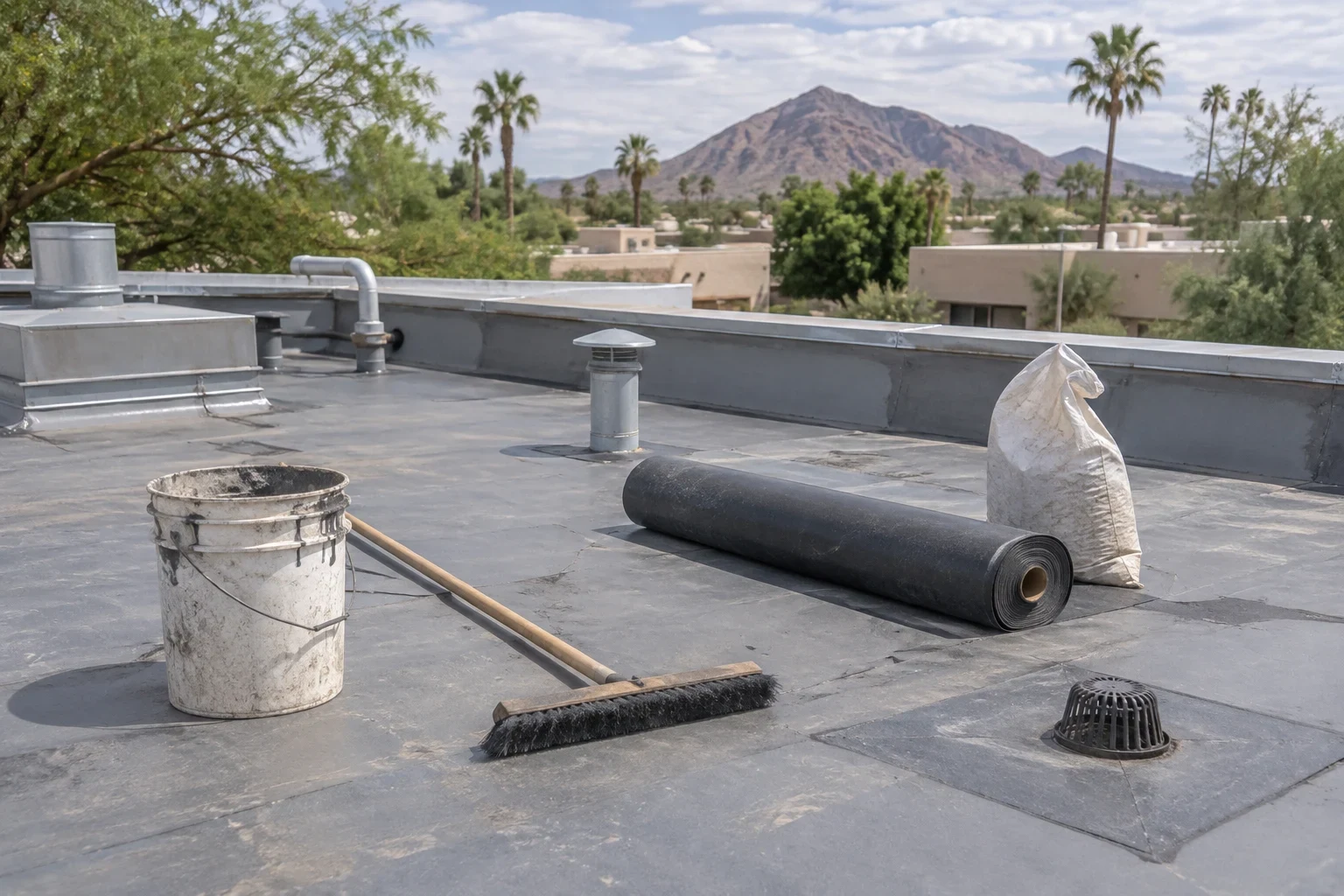
Let's look at your flat roof
Tell us what you are seeing, whether it is ponding, a ceiling stain or a cracked coating. We will set a time to get on the roof and give you a clear, written plan.