ServicesShingle Roofing
Shingle Roofing in Paradise Valley
A shingle roof lasts when the hidden parts are done right: synthetic underlayment, new flashing, nails set in the nail zone and an attic that vents its heat. We repair and install asphalt shingles, show you what we find, and leave your yard as tidy as we would our own.
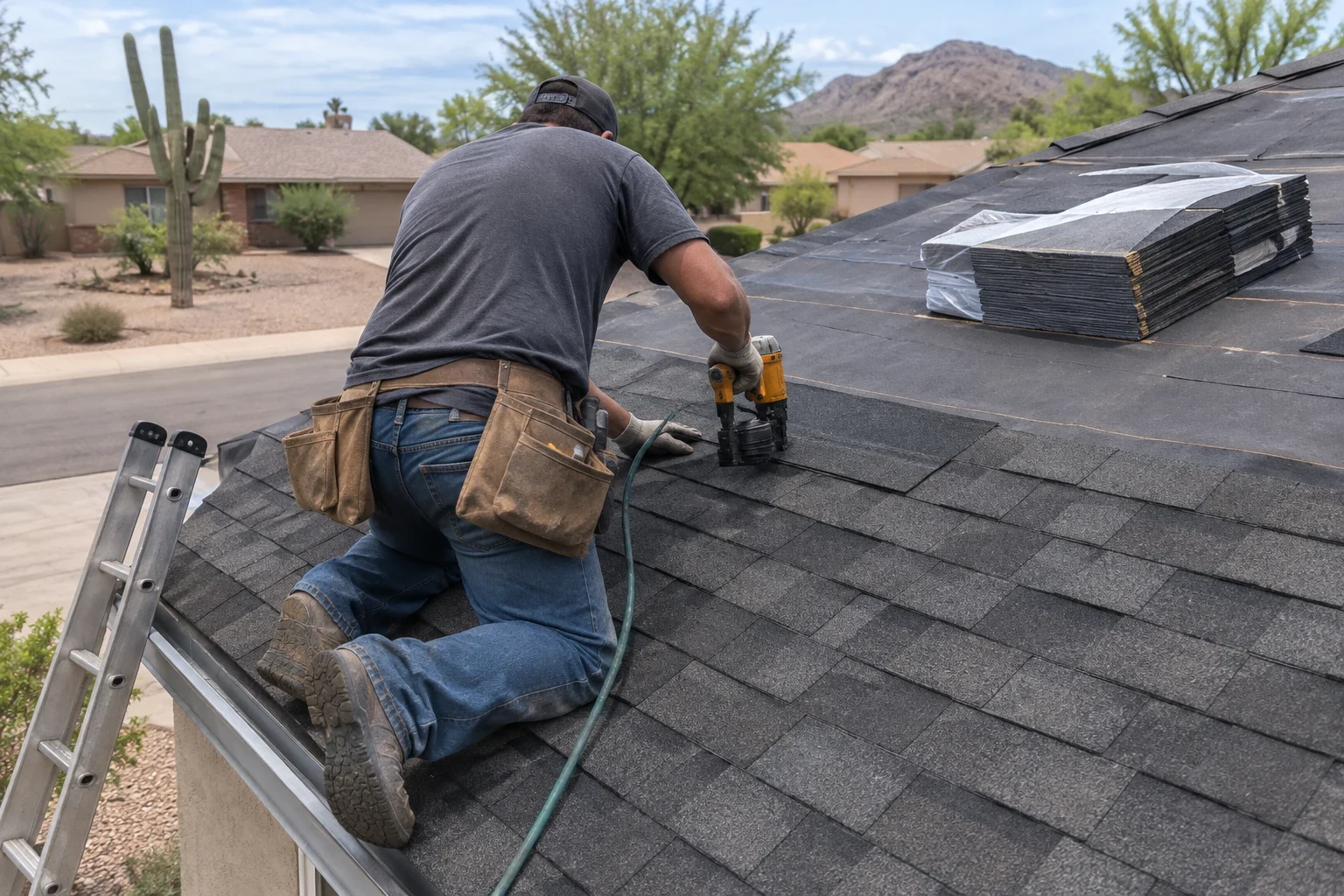
What a shingle roof needs to last out here
An asphalt shingle is a fiberglass mat soaked in asphalt and topped with ceramic-coated granules. The granules shield the asphalt from UV. Once they wash off, the asphalt underneath dries out, turns brittle and starts to crack. In strong sun that process runs faster, so the details around the shingle matter as much as the shingle itself.
Most early shingle failures we see trace back to heat trapped in the attic, nails driven too high or flashing that was reused instead of replaced. We fix those causes, not just the symptoms on the surface. If your home has tile or a flat section, our tile roofing and flat roofing pages cover those systems separately.
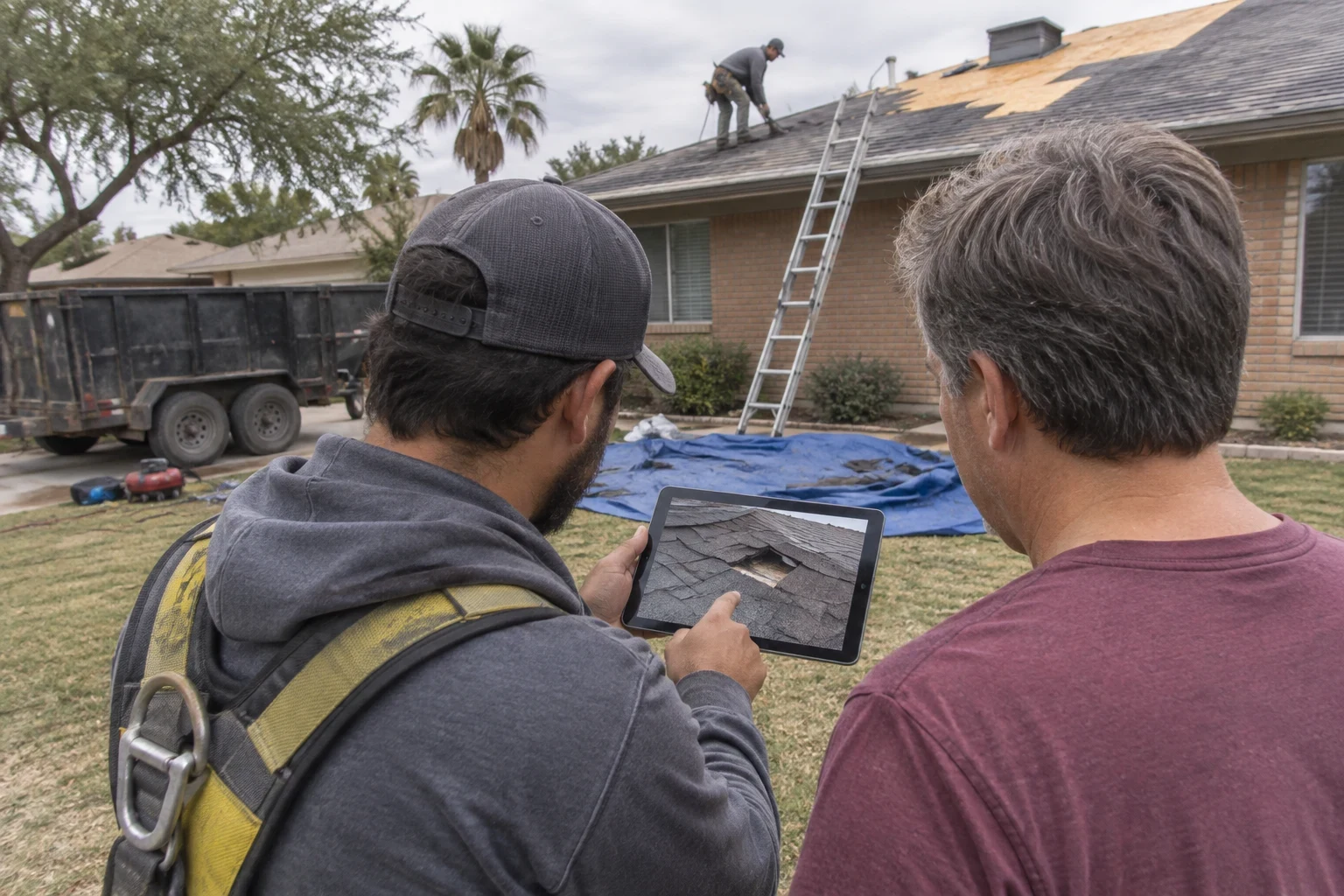
What our shingle work includes
- 01
Heat-rated shingle selection
We walk you through architectural shingles and cool-rated options with reflective granules. Lighter, reflective surfaces can lower deck temperature, which slows asphalt aging.
- 02
Synthetic underlayment
Synthetic underlayment holds up better than felt if it sits exposed for a day, and it does not wrinkle in heat. We add ice-and-water membrane in valleys and around penetrations, where water concentrates.
- 03
Balanced attic ventilation
Ridge vents only work when soffit intake lets air in low. We check the ratio of intake to exhaust and correct it, because a hot, stagnant attic cooks shingles from below.
- 04
New flashing and pipe boots
Rubber pipe boots crack in UV within a few years. We replace boots, step flashing at sidewalls and counterflashing at chimneys rather than bending old metal back into place.
- 05
Wind-ready nailing
Shingles are nailed in the manufacturer's nail zone with a starter course at the eaves and rakes, so the seal strips bond and the edges resist summer wind gusts.
- 06
Daily cleanup
We run magnetic sweepers across the driveway, beds and lawn and haul off old material, so you are not finding nails a month later.
Questions about Shingle Roofing?
Call(480) 470-6535Signs your shingles need attention
Granules in the downspout splash
Dark grit collecting at the base of downspouts means the protective coating is coming off. The asphalt left behind will age quickly.
Curling or cupped edges
Shingle edges that lift or curl usually point to heat building up in the attic. Ventilation needs a look along with the shingles.
Cracked or missing tabs after wind
Torn tabs expose nail heads and the underlayment. Small sections can often be repaired if the surrounding shingles are still flexible.
Stains on the ceiling near a vent
A water mark below a plumbing vent or exhaust fan often means a failed pipe boot, not a failed roof. That is a smaller fix than people expect.
Bare, shiny patches on the slope
Areas where the black asphalt shows through have lost their UV shield and are close to the end of their service life.
How a shingle job runs
- 1
We look and measure
We go up on the roof, measure each slope, check the attic for heat and moisture, and photograph what we find. You see the same photos we do.
- 2
Written, line-item quote
Your quote separates tear-off, decking, underlayment, flashing, ventilation and shingles. We tell you plainly whether a repair will do or the roof is due for roof replacement.
- 3
Permit and scheduling
We pull the permit when one is required and set a start date. Work begins early in the morning so most of the labor happens before peak heat.
- 4
Tear-off and install
We protect landscaping and AC units, strip to the deck, replace any soft plywood, then lay underlayment, flashing, vents and shingles in order. Most homes are dried in the same day.
- 5
Walkthrough
We walk the finished roof and yard with you, point out the new flashing and vents, and answer any questions before we leave.
What sets the price of a shingle roof
Shingle roofs vary too much for one flat number to be honest. We break your quote into its parts, so tear-off, decking, underlayment, flashing, vents and shingles each show up on their own line. The factors below move the total the most.
- Squares and slope
- Cost tracks the roof's area in squares and the steepness of each slope. A steep pitch means more fall protection and slower footing for the crew.
- Plywood under the old roof
- Sheathing stays hidden until the shingles are stripped away. Any sheet that is soft, rotted or delaminating gets replaced individually, and we photograph it for you before it is hauled off.
- Old layers stacked on the deck
- When a previous roofer laid new shingles over old ones, we have twice the material to pull up. That means more crew hours and a heavier load headed to the dump.
- Shingle choice and venting changes
- Moving to a cool-rated shingle, adding ridge vent or opening up soffit intake raises the cost, and each one can add years to the roof.
- Roof details that need hand work
- Chimneys, skylights, clusters of pipe vents and every spot where the roof meets a stucco wall need their own flashing, cut and fit by hand.
Shingle roofing questions
Do asphalt shingles hold up in desert heat?
They do when the shingle is rated for high temperatures and the attic sheds its heat. Most early failures here come from an attic that bakes the shingles from underneath. That is why we check intake and exhaust venting on every shingle job.
Can you put new shingles over my old ones?
Code may allow a single overlay, but we usually recommend against it. A second layer covers up the decking, holds more heat and adds weight and cost to the next tear-off. Stripping to the deck means soft plywood and bad flashing get replaced instead of buried.
How long will my home be without a roof?
On most single-story homes we strip the old shingles and get underlayment down the same day, so nothing is left open overnight. Bigger or more cut-up roofs can take two or three days. Any section still open at quitting time gets covered before we leave.
Should I switch from shingles to tile or foam?
That comes down to your roof's pitch and framing. Tile weighs far more and may need a structural check, while foam fits low-slope roofs. We will give you a straight answer on which suits your home, and our foam roofing page covers that system in more detail.
Does someone have to stay at the house while you work?
No, the crew can work while you are out. It helps if the driveway is clear of cars and pets stay inside, since shingles and nails come off the edge during tear-off. We let you know when we arrive, and once the roof is done we walk it with you so you can see the finished flashing and vents.
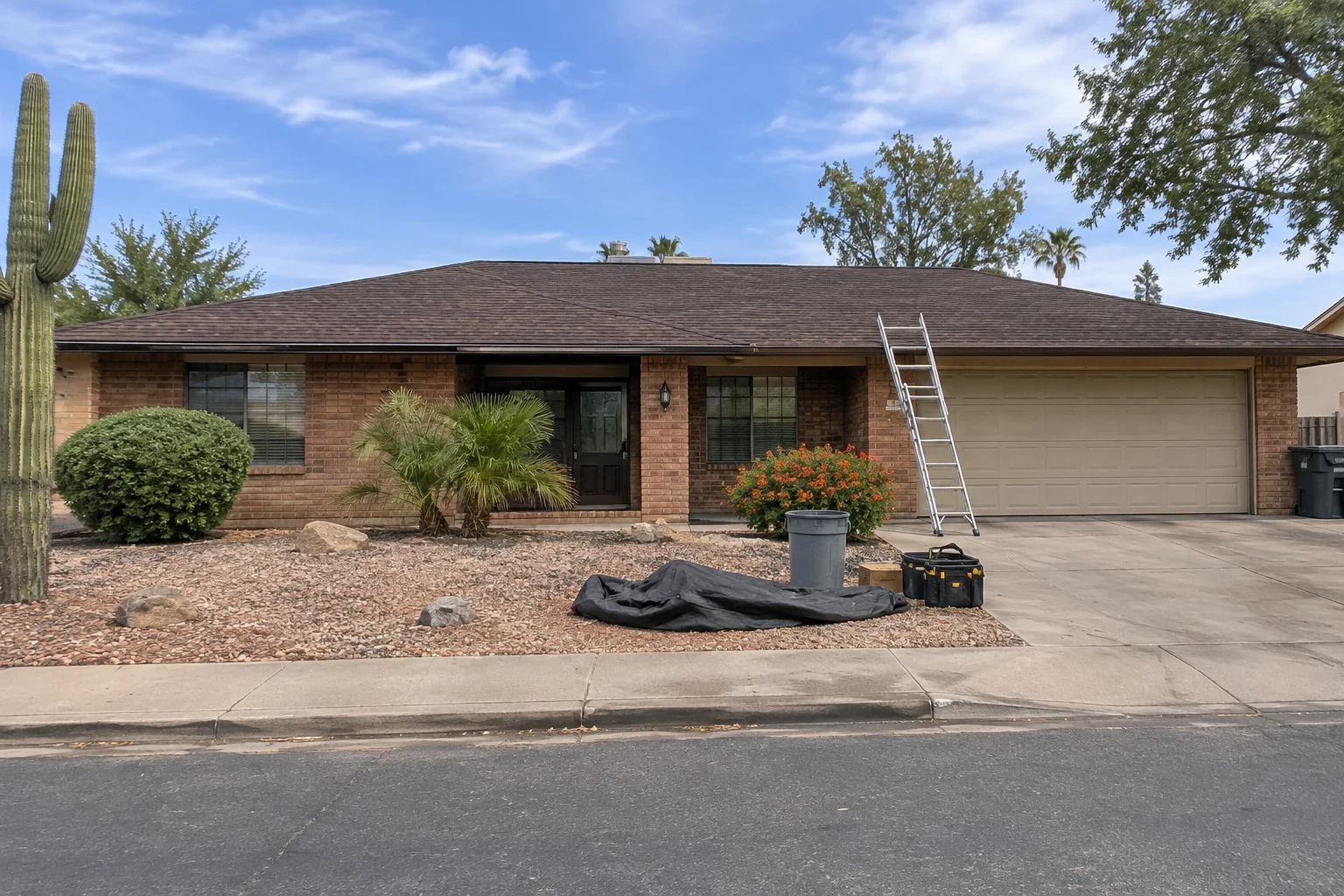
Talk with us about your shingle roof
Describe the curling, bare spots or ceiling stains you have noticed, and we will walk through the likely cause and what fixing it involves. We work in Paradise Valley and the towns around it, including Phoenix and Scottsdale.