ServicesRoof Repair
Roof Repair in Paradise Valley
A water stain on the ceiling rarely sits right under the failure. We trace the leak back to the cracked tile, torn underlayment, lifted flashing or worn coating that let it in, repair that part properly, and show you what we found before anything is closed up.
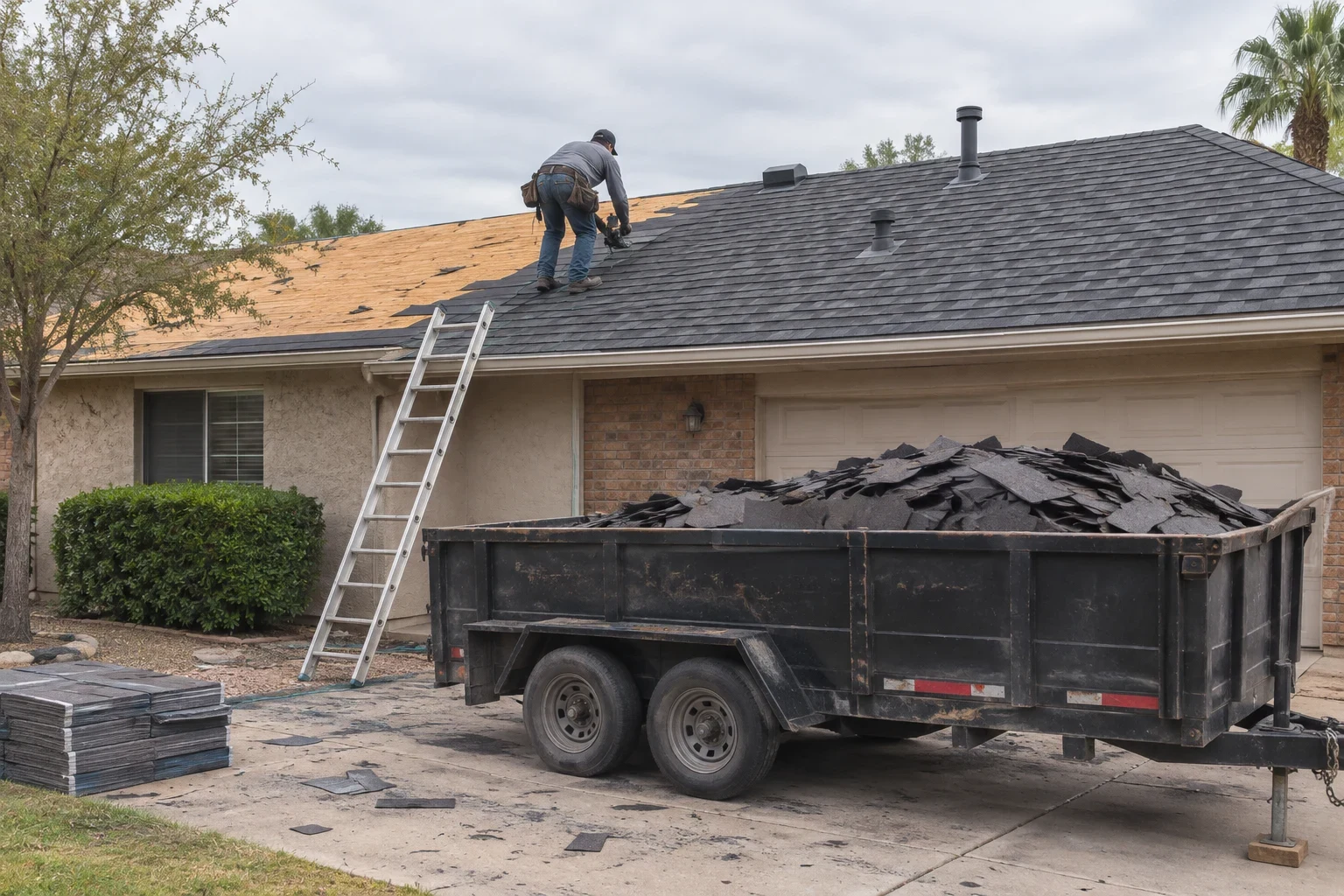
Fixing the cause, not the stain
Most roof leaks come from a small number of parts: flashing at walls and chimneys, pipe and vent boots, valleys, and the underlayment beneath tile. Water enters at one of those points, runs along a batten or rafter, and drips somewhere else. Patching the spot where it shows up inside only moves the problem.
We work on your roof the way we would want a neighbor to work on ours. That means pulling back enough material to see the real damage, telling you plainly whether a repair will hold, and leaving the yard as clean as we found it.
Sustained desert heat is hard on roofing. Asphalt shingles dry out, rubber pipe boots crack, and the felt under concrete tile turns brittle long before the tile itself wears out. A good repair accounts for that by using materials rated for the heat your home actually sees.
What a repair visit covers
- Tracing the leak path
- We start in the attic when there is access, looking for water staining on decking and rafters, then match it to the roof surface above. That tells us where water is entering, not just where it lands.
- Tile lift and underlayment patch
- On tile roofs we lift the field tile around the problem, replace the torn or brittle underlayment section, and relay the tile on its battens. Cracked pieces are swapped for matching profiles where they can be sourced.
- Flashing and penetrations
- Pipe boots, vent flashing, step and counter flashing at walls, and valley metal are the most common failure points. We reseat, reseal or replace them rather than smearing mastic over the gap.
- Shingle, foam and flat roof spot repair
- Blown or heat-cracked shingles are replaced and sealed into the course. Blistered or punctured foam is cut out, refilled and recoated, and open seams on flat roofs are cleaned and closed with compatible material.
- Photos and a plain explanation
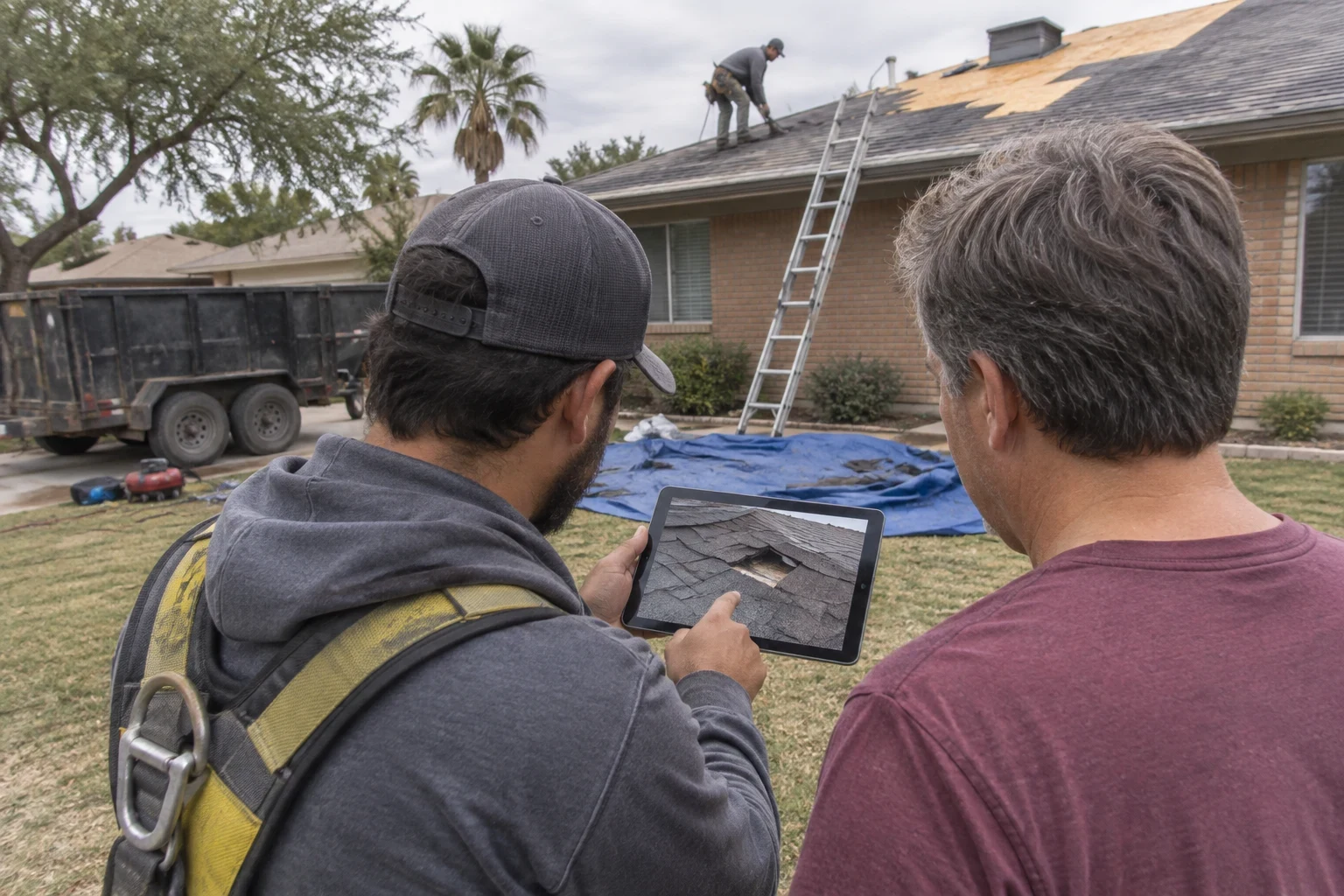
- You see pictures of the damage before we fix it and after it is closed up, with a short explanation of what failed and why.
Signs your roof needs repair
A stain that spreads with each storm
A tan or brown ring on the ceiling that gets wider after every monsoon rain tells you water is getting under the roofing. The entry point is often several feet upslope of the mark.
Cracked or slipped tiles
Broken or shifted tiles leave the underlayment open to sun and water. A single loose piece can let in enough rain to soak the felt under an entire row.
Split pipe boots
The rubber collar sealing each plumbing vent cracks after years of UV exposure. It is an inexpensive part and one of the most common places leaks begin.
Blisters or bare spots on foam
Once the protective coating wears thin, sunlight starts breaking down the foam itself. Chalky, soft or blistered patches should be dealt with before water reaches the deck.
Water sitting on a flat roof
Ponding that hangs around more than a couple of days after rain strains the seams and usually means a low spot or a clogged scupper.
What moves the price of a repair
The final scope of a repair often depends on what sits under the tile, shingle or coating, so we lay out the likely work before starting and call you the moment the picture changes. Your estimate is written line by line, with each part and task listed separately instead of one lump number.
Which roofing material you have
Lifting, stacking and relaying concrete or clay tile takes far more labor than swapping a few shingles. Foam repairs add time because the new coating has to cure before the job is finished.
How far the damage spreads
Replacing one split pipe boot is quick work. Brittle underlayment running across a whole section of a tile roof means more tile to lift and more felt to lay.
What we find under the surface
If the decking has gone soft or rotted, that wood has to be cut out and replaced before any roofing goes back over it.
Hard-to-find replacement material
Older tile profiles and colors are often discontinued. Tracking down salvaged pieces or the closest current match can change both the cost and the schedule.
Slope, height and access
Steep pitches, second stories and narrow side yards call for more fall protection and slower, more careful handling of material on and off the roof.
How a repair day runs
- 1
Start with a phone conversation
Describe the symptoms: the room, the spot on the ceiling, and whether it only appears after rain. With that and your roof type, we can load the right materials before we arrive.
- 2
Locate and photograph the damage
We check the attic and the roof surface, lift tile or shingles where needed, and take pictures of every problem. You get a straight answer on whether a repair is the right fix.
- 3
Carry out the repair
Landscaping and walkways get covered first. Then we replace the failed parts and rebuild the layers in their proper order, each one lapped over the one below it, so rain is carried down the slope and off the edge instead of working underneath.
- 4
Haul away debris and review the work
Torn felt, broken tile and old fasteners leave with us, and we sweep the ground for stray nails. Before we go, we show you the finished repair next to the before photos.
Roof repair questions
Can you repair my tile roof without replacing the whole thing?
In many cases, yes. Concrete and clay tile tend to outlive the felt beneath them, so we can lift a section, lay new underlayment and set the same tile back down. If the underlayment has failed across most of the roof, we will say plainly that a patch will not last and walk you through the options on our Roof Replacement page.
How do you decide between repair and replacement?
We weigh how widespread the damage is against the condition of the decking and underlayment. If the problem is limited to a few spots and the felt and wood everywhere else still hold up, fixing those spots costs less and makes more sense than tearing everything off. The photos we take let you check that reasoning for yourself.
Will the repaired area match the rest of my roof?
We match tile profile, color and shingle style as closely as the available material allows. New pieces can look a shade brighter than sun-faded ones at first. If an exact match cannot be found, you hear about it before any work begins.
Does someone have to be at the house while you work?
Usually not for the whole job. We will need into the attic if water has reached the inside of your home, and we prefer to show you what we found in person. Most of the work happens outside, though, so we can go over the photos with you once you are back.
How long does a typical repair take?
Small fixes like a pipe boot or a handful of shingles usually take part of a day. Tile underlayment work and foam recoating run longer, mostly because coatings need time to cure before they can take weather.
Get that leak traced and fixed
Tell us what you are seeing and which kind of roof your home has. We will explain what we expect to find and how we would approach the repair.