ServicesFoam Roofing
Foam Roofing in Paradise Valley
We spray, repair and recoat polyurethane foam roofs on flat and low-slope homes. You get one continuous layer with no seams that sheds water to the drains, insulates the ceiling below and is covered by a coating built to take direct sun.
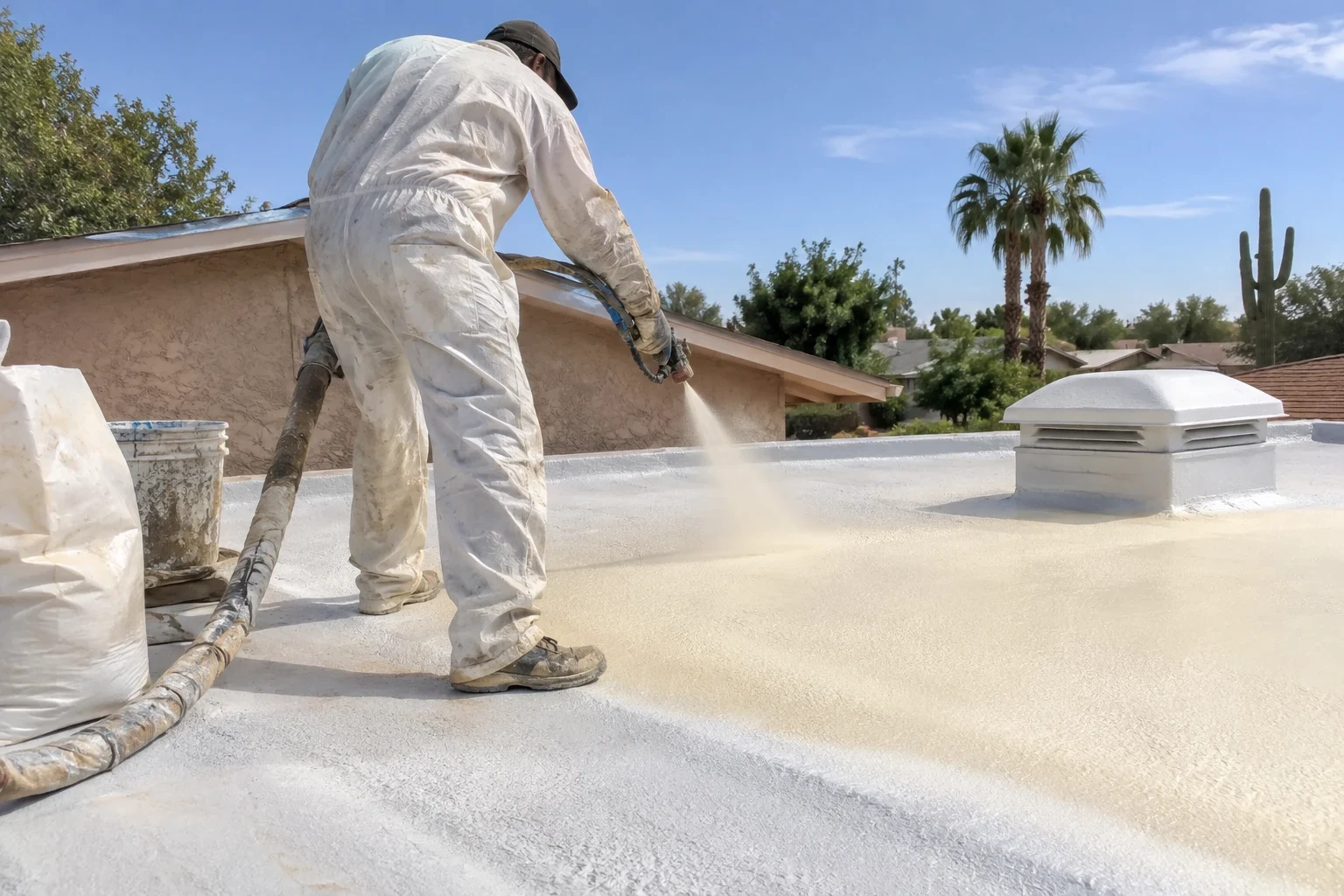
What a Foam Roof Is and When It Makes Sense
A foam roof is spray polyurethane foam, usually about 1.5 inches thick or more, applied as a liquid that expands and cures into a rigid closed-cell layer. It bonds to the deck or old roof below with no seams or fasteners, so there are fewer joints for water to find. On top goes an elastomeric coating, often acrylic or silicone, because bare foam breaks down quickly under ultraviolet light.
Foam is a good fit for flat and low-slope roofs with parapet walls, scuppers and rooftop units, which describes a lot of homes around Paradise Valley and Scottsdale. It can be sprayed thicker in low spots to build slope toward drains, and its insulation value helps keep summer heat out of the rooms below.
Most foam roofs that fail do so because the coating was left to wear thin. We treat your roof the way we would a neighbor's: we tell you whether it needs a recoat, a repair or new foam, and why.
What Our Foam Roofing Work Covers
New foam over an existing roof
Where the old built-up or rolled roof is dry and well attached, we can often spray foam directly over it. That avoids a full tear-off and adds insulation on top of what is already there.
Tear-off and new foam system
If the old roof is holding water or delaminating, it comes off first. Foam sprayed over wet material traps moisture and blisters, so we do not skip this step.
Elastomeric recoats
We clean the surface, repair damaged foam and apply fresh coating at the specified thickness. A recoat on sound foam costs far less than replacing the roof.
Foam and coating repairs
Blisters, bird pecks, cracks and mechanical damage are cut out, refilled with foam and sealed with coating so the patch is protected like the rest of the roof.
Details at parapets, scuppers and penetrations
We foam up the inside of parapet walls and around vents, pipes and AC stands, where most leaks start on flat roofs. Scuppers and drains are kept clear and sloped so water leaves the roof.
Signs Your Foam Roof Needs Attention
Exposed or discolored foam
Foam showing through the coating, or turning a rusty brown and powdery, means UV is eating the surface. It needs coating before it erodes further.
Blisters and soft spots
Raised bubbles or areas that give underfoot usually point to moisture or poor adhesion beneath. Left alone, they split open and let water in.
Water standing after rain
Ponding that lasts more than a day or two after a monsoon storm wears coating faster and stresses the foam. The low spots can be built up to drain.
Pecks, holes and cracks
Birds pick at foam, and dropped tools or foot traffic around AC units can puncture it. Small holes are easy to fix early and costly once water reaches the deck.
Stains on ceilings below
A ceiling stain under a flat roof often traces back to a parapet or penetration detail, not the open field of the roof.
How a Foam Roof Job Runs
- 1
Look and measure
We walk the roof, check for wet areas in the existing material, note drainage and measure. You get a written estimate that says whether we recommend a recoat, repair or new foam.
- 2
Prep and protect
Loose gravel and failed material are removed, the surface is cleaned and dried, and vents and walls are masked. Foam overspray can drift in wind, so we cover cars and nearby surfaces and do not spray when wind is too strong.
- 3
Spray the foam
Foam goes on in passes to reach the planned thickness, with extra build in low spots to move water toward scuppers and drains. Parapets and penetrations are foamed into one continuous layer.
- 4
Coat and finish
A base coat and top coat of elastomeric coating are applied, often in contrasting colors so full coverage can be checked. Granules may be added in walk areas for wear resistance.
- 5
Clean up and walk through
We clear debris, remove masking and go over the finished roof with you, including what to watch for and when the coating will need renewing.
What Moves the Cost of a Foam Roof
Foam roofing is priced by the square foot, yet the state of the foam or old roof under the coating can swing the total just as much as the roof's size. A recoat on healthy foam and a tear-off with new foam are very different jobs. We explain each line of the estimate so you can see where the money goes.
- Recoat, overlay or tear-off
- Recoating sound foam is the least involved. Spraying over a dry existing roof costs more, and removing a wet or failed roof first adds labor and disposal.
- Foam thickness and slope
- Thicker foam adds insulation, and building slope to fix ponding takes extra material in those areas.
- Coating type and thickness
- Acrylic and silicone coatings differ in cost and in how they handle standing water. Thicker coats last longer between recoats.
- Parapets and rooftop equipment
- Tall parapets, many penetrations and AC units that need lifting or working around all add detail time.
Foam Roofing Questions
Something not covered here? (480) 470-6535
How long does a foam roof last?
The foam itself can last decades if the coating is kept up. The coating is the wear layer, and it needs to be renewed periodically depending on its type, thickness and sun exposure. Recoating on schedule is what keeps the foam from ever being exposed.
Can you spray foam over my existing flat roof?
Often, yes, if the existing roof is dry and firmly attached. We check for trapped moisture before recommending it. If the old material is wet, it has to come off, because foam over wet material will blister.
Will the work be messy around my home?
Spray foam can drift in wind, so we mask the roof edges, cover vehicles and nearby surfaces, and schedule spraying for calm conditions. The coating stage is quieter and cleaner. We clean up when the job is done.
Can I walk on a foam roof?
Yes, for normal service access such as reaching an AC unit. Heavy or frequent traffic wears coating, so we can add granules or walk pads along common routes.
Should I choose foam or another flat roof system?
Foam works well where insulation, building slope and sealing many penetrations matter. Some homes are better served by other low-slope systems, which we cover on our Flat Roofing page. We will tell you which one fits your roof and why.
Find Out What Your Foam Roof Needs
Tell us what you are seeing on the roof or the ceiling below. We will explain whether a recoat, repair or new foam makes sense and set up a time to come look.