Roofing Service in Paradise Valley and Neighboring Towns
Paradise Valley Roofing repairs, replaces and installs tile, shingle, foam and flat roofs for homeowners here and in the towns next door. We handle each roof the way we would a neighbor's: a plain explanation of what failed and why, a clean yard when we leave and work built to code.
Towns we cover from Paradise Valley
- Paradise Valley
- Phoenix
- Glendale
- Scottsdale
- Tempe
- Fountain Hills
- Guadalupe
Not on the list? Call (480) 470-6535 and ask.
The Area We Cover
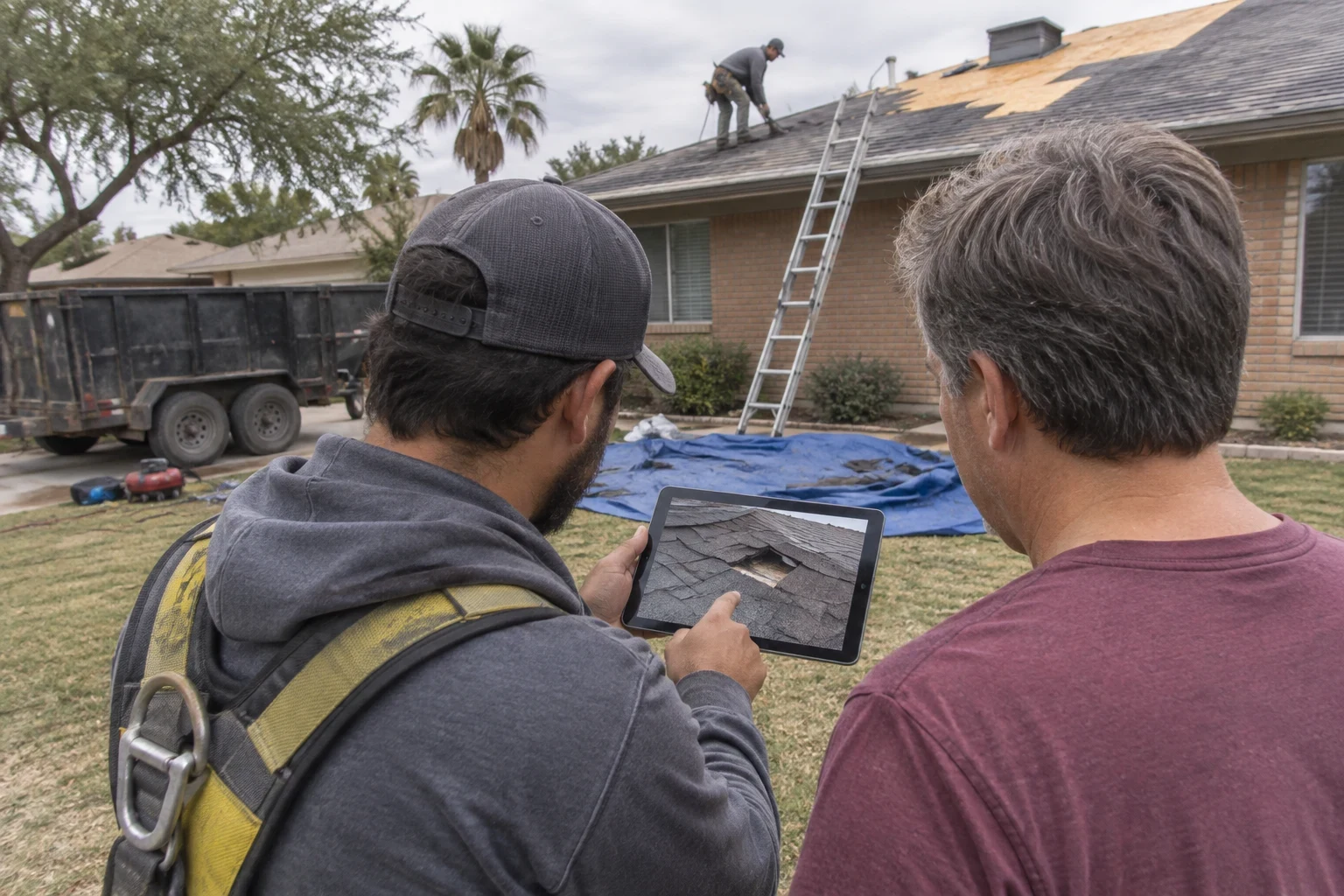
We are based in Paradise Valley, and nearly all of our jobs sit a short drive from home. Roof repair, roof replacement and new roof installation regularly take us into Scottsdale, Phoenix and Fountain Hills, south to Tempe and Guadalupe, and west as far as Glendale. A compact area has a practical payoff for you: the same person who priced your roof can stop back without trouble if something comes up once the crew is gone.
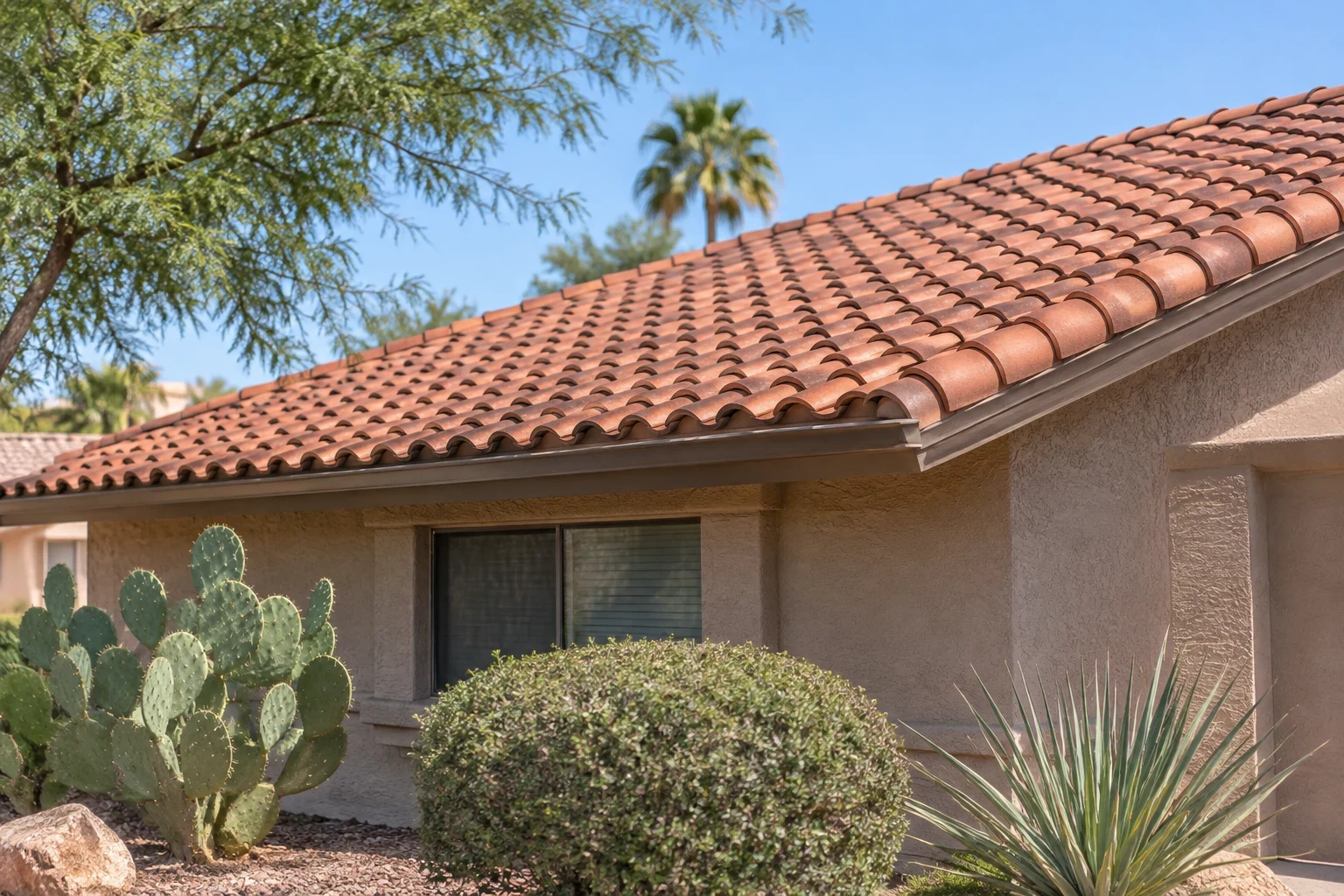
Homes across these towns are built with many of the same roof systems. You will find concrete and clay tile on sloped framing, asphalt shingle on a good share of older houses, and low-slope areas covered in spray polyurethane foam or modified bitumen. Working on these systems every week lets us point to the cause of a leak, such as a torn underlayment lap or a failed flashing seam, instead of just patching the wet spot. Not sure we reach your address? Ask on the call and you will get a direct answer.
Conditions That Affect Roofs Around the Metro
- 01
Housing age and roof types
A large part of the metro went up from the 1960s on. Older single-story ranch homes often combine a pitched roof with flat sections over a carport or a later addition, and plenty have already been reroofed once or twice. Newer construction relies mostly on concrete tile. Those tiles hold up for a very long time, yet the felt or synthetic layer under them gives out much sooner, which is why many tile jobs mean lifting the tiles, laying fresh underlayment and setting the tiles back.
- 02
Heat and UV
In summer a roof surface runs well above the air temperature. That heat bakes the oils out of felt underlayment, turns asphalt shingles brittle and wears down the acrylic or silicone coat on a foam roof. When the coat thins out, sunlight begins breaking down the foam underneath, so keeping a foam roof recoated on time does more to protect it than nearly any other step.
- 03
Monsoon season
Roughly July through September, quick storms arrive with gusting wind, dust and heavy rain in a short window. That is when small weak points tend to give themselves away: a cracked tile, a shingle tab that has lifted, or a low spot where water collects on a flat roof. We schedule bigger projects around those months where possible and close up any open section of roof before we leave each day.
- 04
Permits and HOAs
Every town has its own building department, and a reroof generally requires a permit plus a final city approval. Many neighborhoods also answer to an HOA with rules about tile color, profile or roofing material. We pull the permit with the jurisdiction your home falls under and help you pull together the product sheets your HOA wants to see before we start.
Find Out If Your Street Is on Our Route
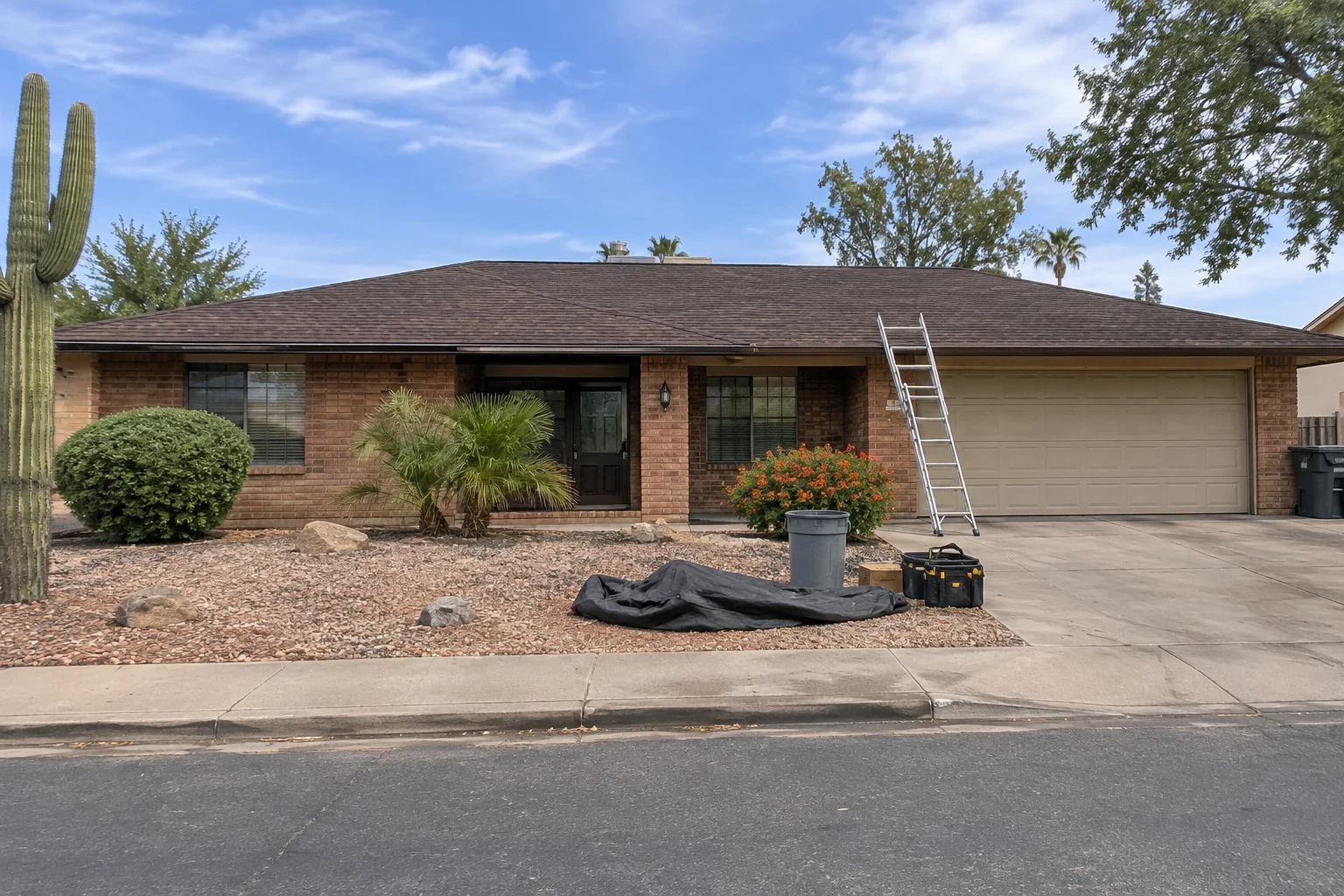
Tell us which town you live in and what your roof is doing, such as a brown ring spreading across a ceiling, a tile that has slid out of line or rainwater pooling on a flat section. We will go over the likely cause by phone and set a time to come out and measure for your estimate.