ServicesRoof Replacement
Roof Replacement in Paradise Valley
When patches stop holding, we strip the old roof to bare decking, replace soft or rotted sheathing, and rebuild with new underlayment, new flashing and the tile, shingle or foam covering that suits your home. First, though, you get an honest read on whether replacement is actually needed.
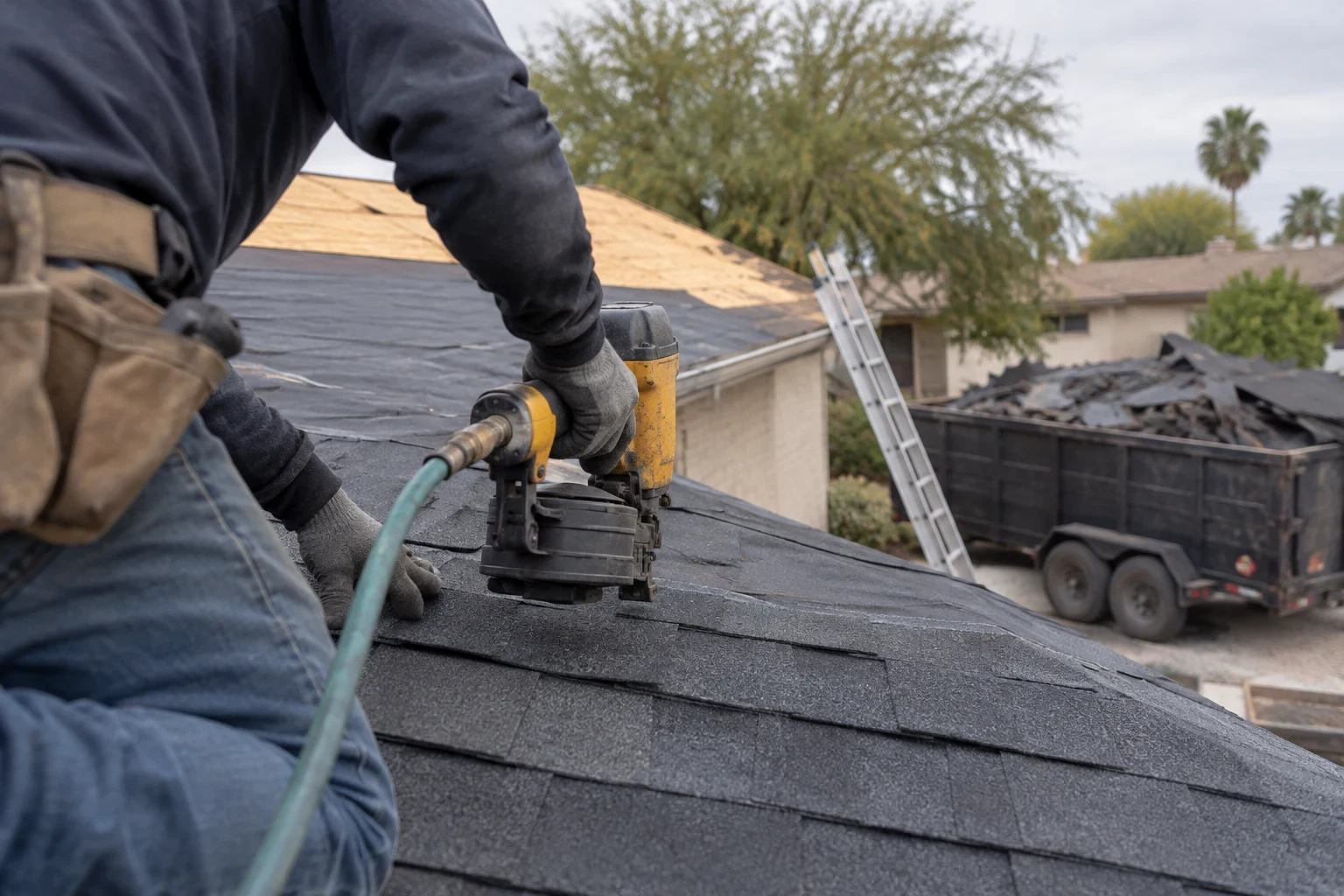
When Replacement Is the Right Call
Most roofs here do not give out at the surface first. Concrete and clay tile can last for decades, but the felt beneath it bakes dry, cracks and quits shedding water long before the tile itself wears. Shingles shed granules under steady UV and begin to curl. Foam loses its protective coating, and then the sun starts breaking down the foam underneath. Once the waterproofing layer is worn out across most of the roof, each repair just moves the leak somewhere else.
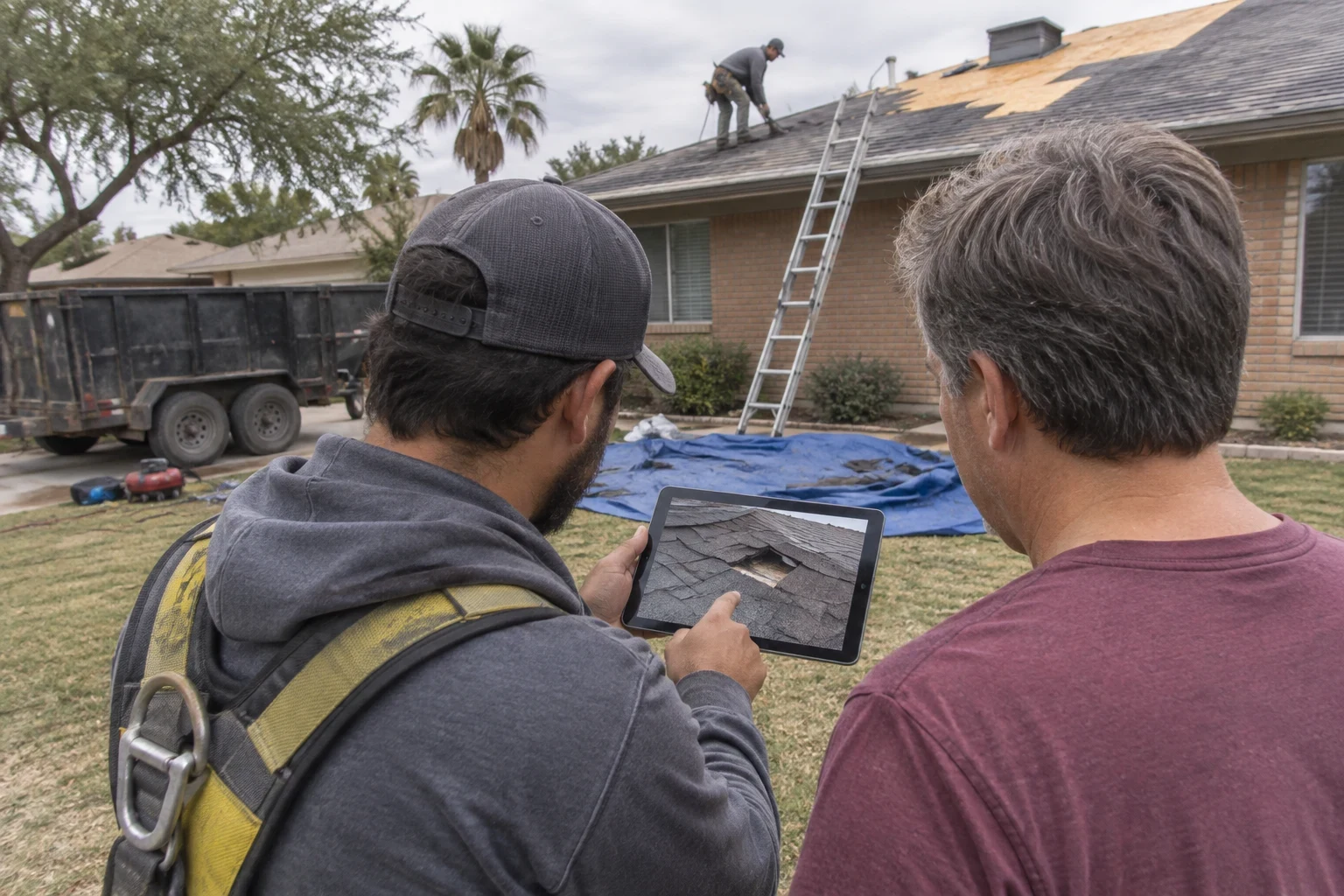
We tell you which of those cases you are dealing with. When a focused roof repair can honestly carry the roof several more years, that is what we recommend. When the underlayment is brittle from ridge to eave, a full replacement ends up cheaper than a string of patches, and we show you why with photos taken on your own roof.
What a Full Replacement Includes
- Complete tear-off
- We remove old shingles, tile, felt, foam or built-up layers down to the roof deck. Reusable tile is stacked and set aside when its condition allows.
- Deck repair
- With the deck exposed, we replace delaminated plywood, rotted fascia ends and soft sheathing around old leak points. New covering over a damaged deck just hides the problem.
- New underlayment
- We install underlayment rated for the heat it will see. Under tile, that means a heavier membrane built to outlast the felt that failed the first time.
- Flashing and penetrations
- Valleys, wall flashings, pipe jacks, skylight curbs and HVAC stands get new metal and sealing. These joints are where most leaks start, so we do not reuse tired flashing.
- Your choice of roof covering
- We install tile roofing, shingle roofing, foam roofing or flat roofing systems, and we can match or change the material depending on your home's structure and slope.
- Cleanup and magnet sweep
- Debris goes into a bin, not your landscaping. We sweep the driveway and yard with a magnet for loose nails before we leave each day.
Signs Your Roof Needs Replacing
Leaks in more than one place
One drip is usually a repair. Stains appearing in several rooms point to an underlayment that has failed across the roof.
Brittle felt under the tile
If a lifted tile shows black felt that crumbles or has holes, the tile is doing little more than shading a worn-out waterproofing layer.
Curling or bald shingles
Cupped edges and granules collecting at downspouts mean the asphalt is exposed to UV and wearing fast.
Soft spots on a foam roof
Blisters, exposed foam turning brown or ponding that never dries all mean water is getting into the foam.
Sagging rooflines
A dip between rafters usually means the deck has been wet for a while. That needs attention before the next monsoon season.
Repairs every season
If you are paying for a fix each year, it is worth comparing that running total to a new roof.
What Moves the Price
We price each roof from what we actually see on it, so we will not give you a number sight unseen. The factors below are what push the total up or down, and each one gets its own line on your written estimate.
Area and slope
A larger roof takes more squares of material and more hours on the deck. Steeper pitches call for extra fall protection and slow the crew down, which adds labor.
Material choice
Tile, shingle and foam differ in material cost and install time. Reusing sound tile can lower the cost of a tile underlayment replacement.
Deck condition
Some damaged sheathing stays hidden until the old covering comes off. We price replacement boards per sheet and show you photos before adding any.
Layers and access
Several old layers mean more tear-off and more disposal weight. Tight side yards, tall walls or plantings close to the house can add time.
How the Job Runs
- 1
Assessment and written estimate
We get up on the roof, check the attic for water staining and lift a few tiles or shingles to see the layer underneath. You get a line-item estimate along with photos of what we found.
- 2
Permit and scheduling
We pull the building permit and order materials. Tile and some foam systems take longer to arrive, so we give you a realistic start date up front.
- 3
Tear-off and deck work
Tarps go over plants, pool equipment and walls before anything comes down. We strip the roof in sections sized so each one is covered with underlayment before quitting time, and repair the deck as it is exposed.
- 4
Installation and city inspection
Underlayment, flashing and the new covering go on. The final permit inspection follows, and we handle getting it on the calendar.
- 5
Handoff and last cleanup
Before we call the job done, we tour the yard and roofline together and run the magnet over the grounds one more time. We point out each part that is new, including any deck boards we had to replace along the way.
Roof Replacement Questions
Can you replace just the underlayment and keep my tile?
Often, yes. We lift the tile, install new underlayment and flashing, then relay the tile and swap in new pieces for any that are cracked. Whether it pays off depends on how many tiles are still sound, and we count that before we price it.
How long will my home be without a roof?
It is never left open. Each day we strip only the section we can cover with new underlayment before the crew leaves, so the house is sealed overnight. Total job length depends on size and material.
Will I have to stay home while the crew is working?
No. We would like a few minutes with you on the first morning and again at the end, when we review the finished roof together. Pulling off the old roof sends vibration through the rafters and walls, so leave your cars on the street and take mirrors, framed pictures and other fragile pieces off the walls ahead of time.
Is it better to switch materials when replacing?
Sometimes. Going from shingle to tile adds a lot of weight and may require a structural check, while low-slope sections often do better with foam than with what was originally there. We explain the tradeoffs for your home and let you decide.
What if you find damage you did not expect?
We pause and show you. You see photos of the damaged deck or rafter and the cost to fix it before any extra work goes forward.
Find Out What Your Roof Really Needs
Describe the leaks, stains or worn spots you have noticed and we will arrange a visit to check both the surface and the waterproofing beneath it. Whether the answer is repair or replacement, you get it plainly, with a written estimate to back it up.